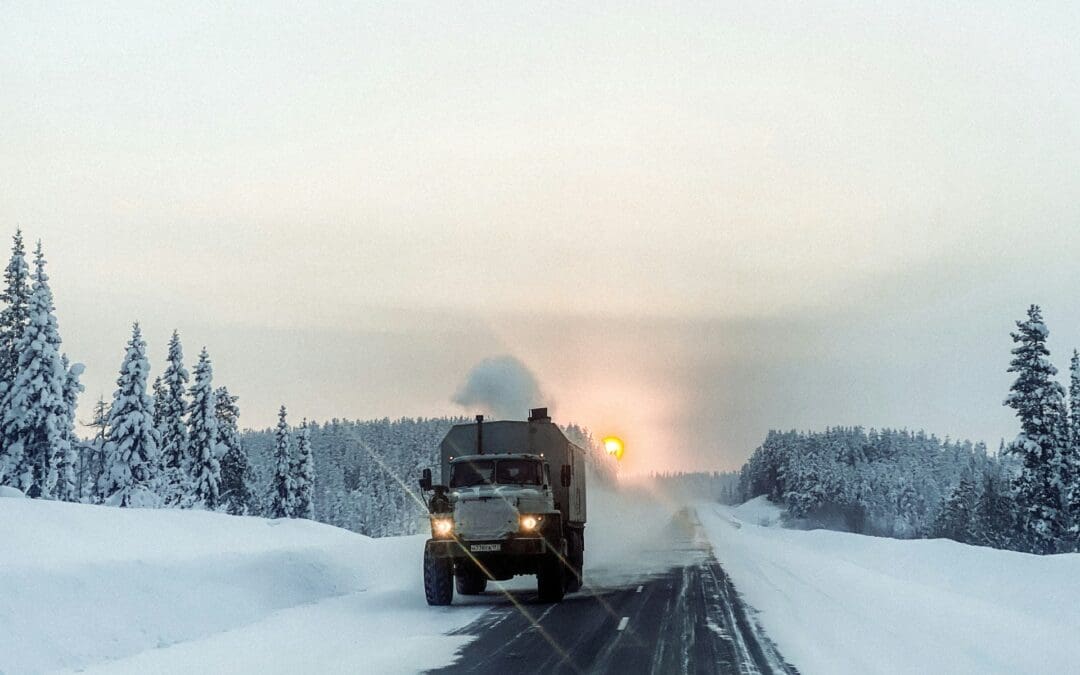
Snowy roads in winter turn everyday freight runs into something more demanding. Across places like Montana and the northern routes of the U.S. and Canada, even a simple haul can bring new problems. Icy pavement, changing forecasts, and shorter daylight hours all add extra layers of planning that we cannot ignore.
Freight logistics in winter depends on more than just a good schedule. Timing gets tighter, safety checks run longer, and cargo protection becomes a top priority. Our job shifts from just driving the load to managing it through weather that does not always co-operate. That is where preparation, route planning, and the right gear come into play.
Planning Ahead for Winter Freight
Getting winter freight ready starts days in advance, not hours. We look ahead, map smart routes, and avoid trouble spots whenever we can.
- We adjust our route mapping to stay clear of roads known for closures or high accident risk during snow season. If a pass gets closed often, we plan to bypass it in advance.
- Weather watching becomes routine. We check live forecasts every few hours and, if something changes suddenly, we reroute while there is still time to make a switch.
- Having dispatchers who know mountain roads and border crossings well helps us spot red flags before they catch us mid-trip.
No plan goes perfectly, but with solid freight logistics, we can avoid most surprises. That is half the battle once winter hits.
Equipment That Keeps Freight Moving
Once winter rolls in, our trucks need to be more than just full of fuel. Every part of our rig has to work harder when conditions get colder and roads turn slick.
- We run winter tires or carry chains when it is required across mountain passes. Good traction keeps the load upright and the driver safe.
- Heating units and idle control systems help keep trailers warm if temperatures dive. That way, cold-sensitive items like produce or medicine do not suffer during long stops or delays.
- Modern temperature-controlled trailers can heat or cool as needed. Even with extreme wind chill outside, our cargo stays within its safe zone.
- Onboard tracking helps monitor both the vehicle and the trailer environment. It gives dispatchers a real-time view, which is key when the route turns difficult.
- Our advanced fuel-efficient technologies help us get through longer distances even when winter driving slows things down.
Nothing guarantees a smooth trip in tough weather, but the right gear gives us the best chance of making it steady and safe.
Handling the Unexpected on Snowy Routes
Even the best-planned winter haul can change fast. Roads close without warning, storms roll in early, and accidents ahead can block lanes for hours.
- When we run into a delay, the first step is clear communication between drivers and dispatch. They check alternate routes and talk through options with us right away.
- If we know a delivery will miss its window, we stay in contact with the customer. That way, nobody is left guessing.
- Some loads cannot sit too long in a cold trailer. So if needed, we look for short-term storage stops along the way that can maintain proper temps until the trailer is moving again.
- We follow backup protocols that outline alternative routes, rest stops, and solutions to protect the goods if the trip stalls.
- Our state-of-the-art tracking systems help us communicate with clients and monitor each load for temperature shifts or delays.
It is never our goal to shift plans, but if we do, we act early enough that the cargo stays in good shape from start to finish.
The Toughest Routes and How They Are Managed
Certain stretches test our skills more than others once snow hits. Across northern corners of the U.S. and into Canada, we know where the pinch points are.
- In Montana, high mountain passes can be snow-covered from late autumn through early spring. We watch for high winds and ice, especially around places like Bozeman Pass.
- Remote roads in British Columbia or Alberta can go quiet for hours. Cell service may drop, so radios and pre-checks matter more than usual.
- Border crossings can create slowdowns, especially during storms or on holidays. We plan our timing and paperwork carefully to avoid getting stuck at the line.
- High-risk routes get extra prep. That might mean adding more fuel stops or splitting the route over two days to stay ahead of the weather.
Driving those roads in mid-winter takes patience, sharp focus, and trust in the people helping guide the trip from the office side.
What Customers Should Know About Winter Freight
Shipping freight in the heart of winter means adjusting expectations. Even if a route is familiar, snow shifts how we plan it.
- Lead times may stretch a bit to give more cushion in case of bad weather. Booking ahead is always better than rushing close to the delivery date.
- A delay of an hour or two does not always mean something went wrong. Sometimes it is just road safety or waiting out a sudden storm cell.
- Cold-sensitive cargo should be packaged for the season. That way, if the trailer is stopped briefly, the goods are not automatically at risk.
- Choosing a carrier with winter route experience helps avoid trouble. The more we have run snow routes, the better we are at keeping goods safe and on track.
When everyone is prepared and realistic about how winter works, it makes the entire process smoother.
Staying Steady When Weather Does Not Co-operate
Every winter brings new tests. But getting through it comes down to preparation, clear thinking, and using the right tools for the season.
Snow slows things down, adds steps, and bumps up the chances of unexpected turns. But with the right planning behind the wheel and behind the scenes, loads still run strong from pickup to delivery. Even in deep February, we make sure nothing stops moving for long. That is how we keep winter freight steady.
Winter conditions can make shipping challenging, but working with a team that understands what freight needs during snow season makes all the difference. At K&K Trucking, we have years of experience handling tough roads, storm delays, and temperature-sensitive hauls. Whether your route crosses Montana highways or stretches into Canada, we keep things moving safely with strong planning and tracking tools. Our approach to freight logistics keeps your shipments on track when the weather does not cooperate. For reliable transport through the cold, trust K&K Trucking.